“At the moment it is not physically possible to put customers on an EV tariff from Day 1, Customers must sign up to another tariff and then proactively change the tariff later“
As part of a wider piece of work around the Join experience overall, it was identified that EV Tariff Join had particularly low NPS – with a desire to increase EV tariff customers, we needed to address the causes of this negativity.

The problem to solve
Current technical constraints prevent a customer from joining BG and being able to be on a time or type of use tariff straight away. This is the same for all energy companies but they don’t seem to have the negative impact on the customers. Without changing the technical solution, what can we do to improve the onboarding process for customers wishing to join on an EV tariff?
I ran the EV Tariff Join element of a wider piece of work around all Join Net Promoter Scores (NPS), and was guided by the lead designer on this wider piece to ensure alignment.
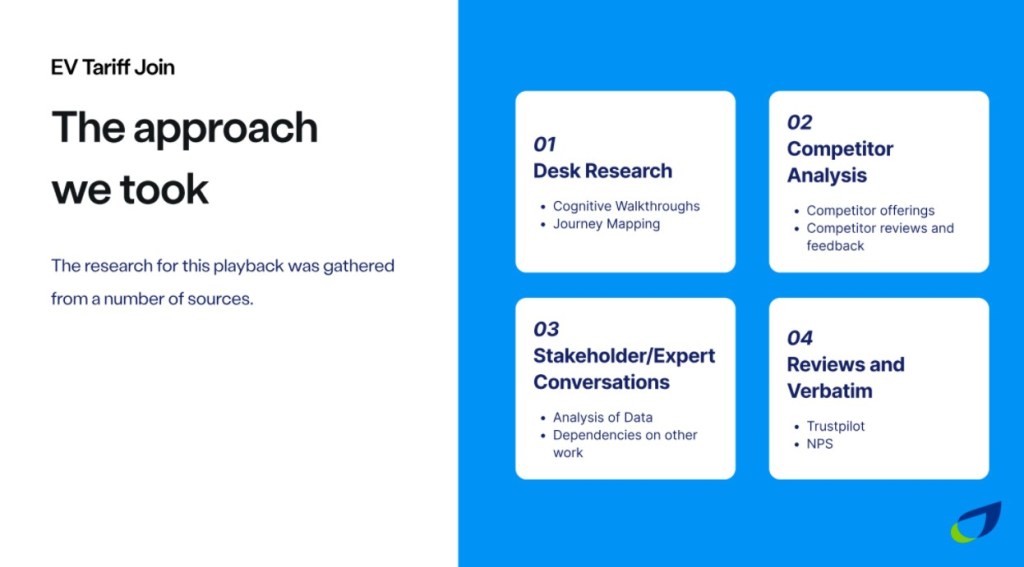
Gaining an understanding of the landscape
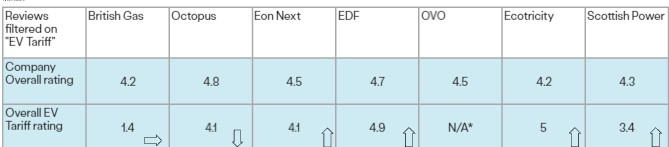
The first thing that I did was undertake desk research – looking at how competitors dealt with this challenge, and whether there were any core differences or similarities to how BG address this situation with new customers.

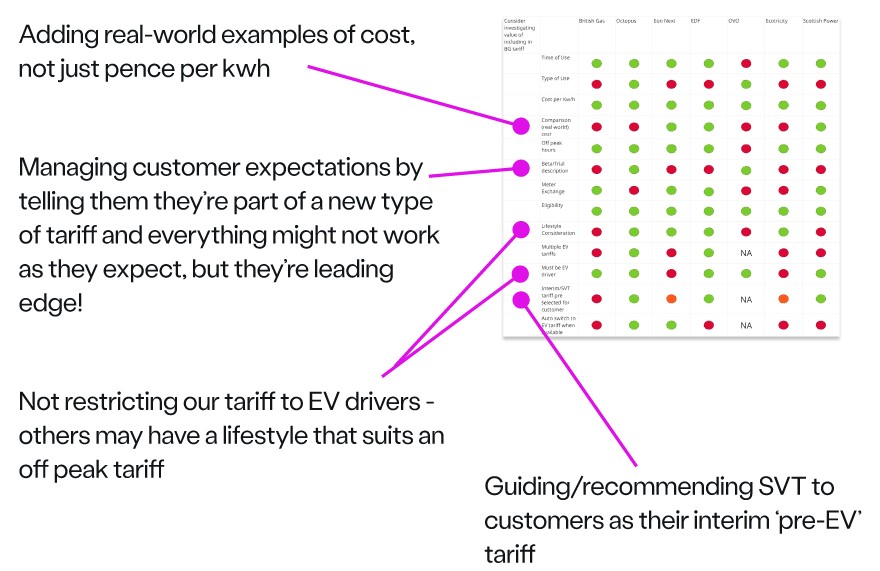
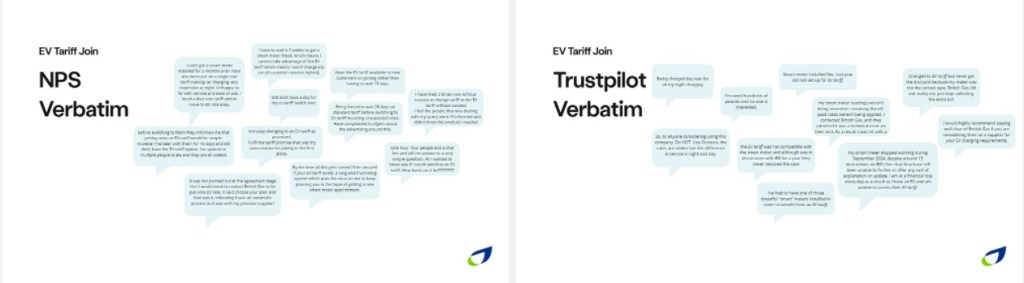
I reviewed internal customer verbatim from the join journey, and external feedback from Trustpilot where I also analysed the delta between the standard score for an energy company and those where the verbatim mentioned EV tariffs.
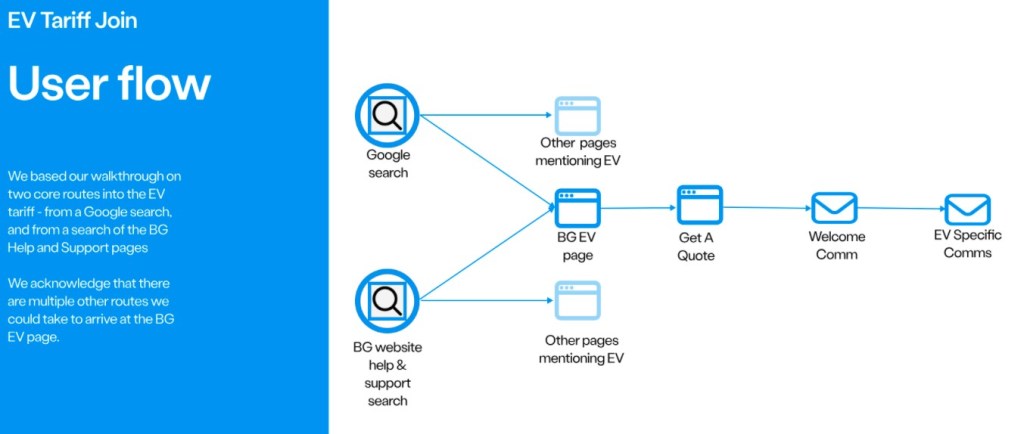
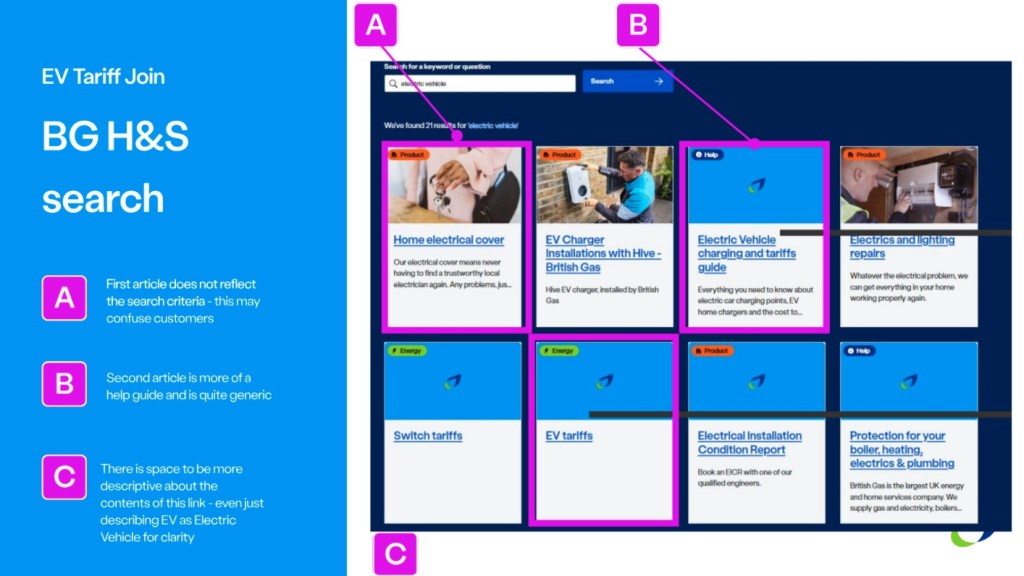
Then looking at BGs own website as a light touch expert review to understand where customers may look for information and what they might find by defining a user flow to follow.
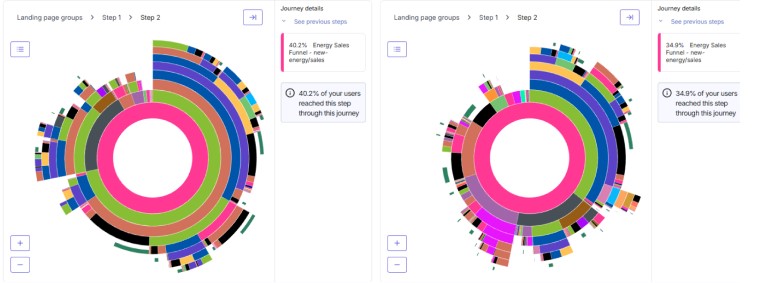
Using analytics tools such as contentsquare enabled us to compare the non EV tariff join journey with the EV tariff join journey and customer orienteering behaviour could be identified, showing that they weren’t really understanding what they were seeing and needing to return to previous screens more often than the general customers who would wish to get a quote and join.
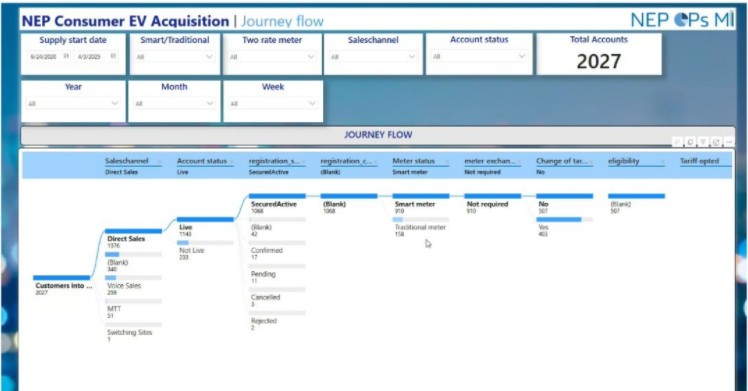
MI reporting was commissioned to understand where the customers fall away from taking up the EV tariff, assuming that they have already joined
Maintaining Stakeholder Engagement
By keeping our stakeholders engaged and informed we were able to get approval to move to primary research.
The plan was to interview 12 participants, all with EVs, but not with one specific energy provider and a mix of those already on special tariffs and those who weren’t.
Conducting Primary Research
Using a prototype created in Nucleus – closely based on the existing journey, we were able to not only gain general opinions on EV tariffs and customer expectations, but also verbatim comments as part of useability feedback.

Without exception the first nine participants did not have a positive experience with the join journey for EV tariffs, so we made the decision to change the stimulus for the last three participants to a potentially ‘improved’ concept so that we could benefit from their input in a stronger way that just corroborating the previous nine participants.
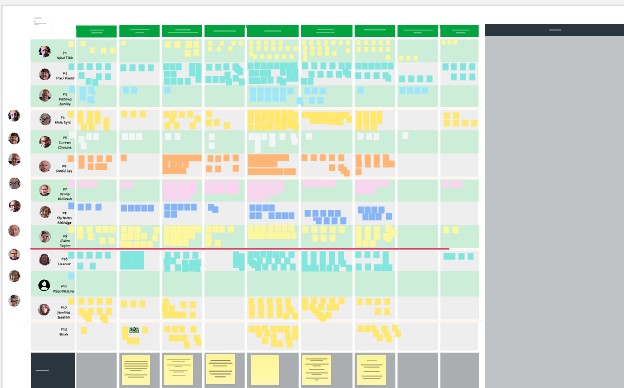
The remaining three customers reacted positively to the new screens they were shown, and this was captured in the output as non conclusive, but a solid indication that more research may be beneficial if the decision to adjust the existing journey was made.
The final asset
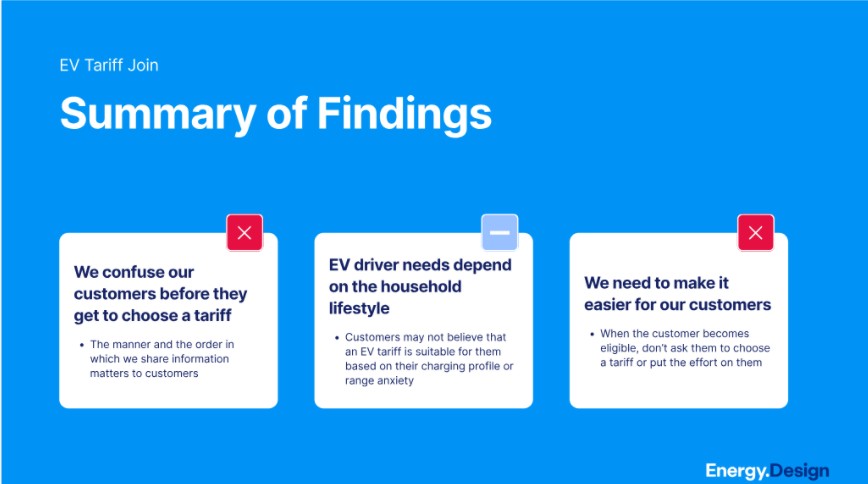
Because this was a segment of a wider piece, the final asset for this work was a research findings report, following on from the interim findings presented prior to the primary research. I was able to identify themes and insights, making recommendations for quick win actions and longer term projects which may be prioritised across multiple backlogs


 Sarah Ford - Service Designer